In March 2026, Spokane International Airport, the City of Spokane, and Spokane County submitted a plan to the Washington State Department of Ecology outlining how drinking water will be offered to West Plains residents that currently rely on drinking water affected by PFAS.
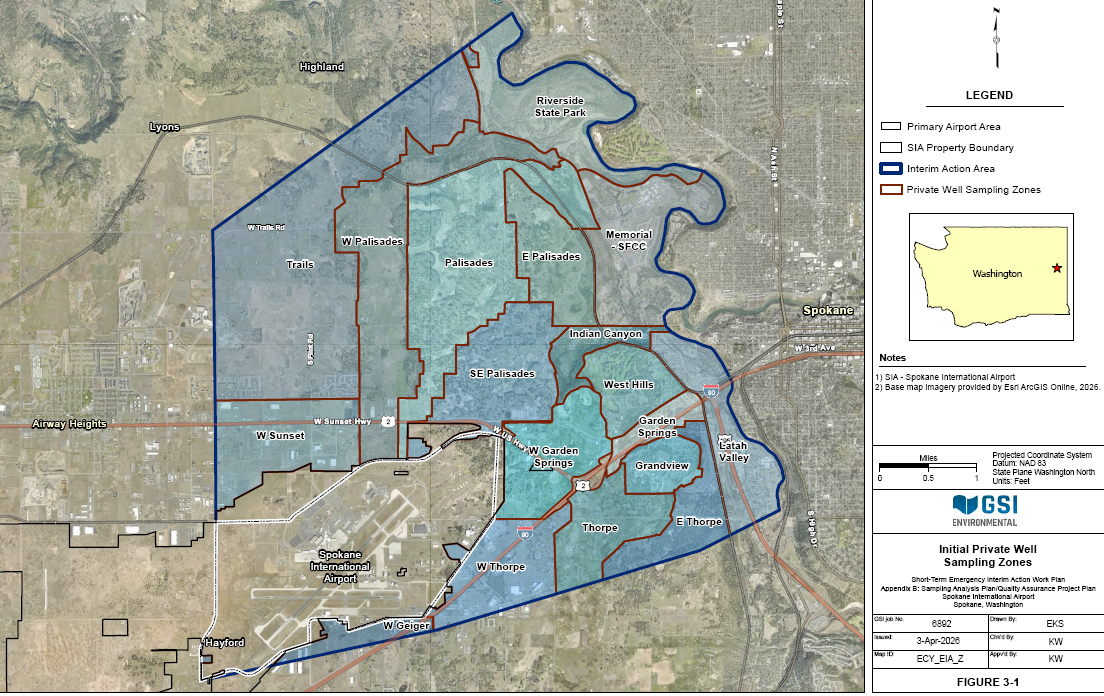
The defined area includes about 2,000 parcels already connected to City of Spokane municipal water (clean drinking water), 2,000 vacant parcels, and roughly 900 parcels with buildings that may have private wells for drinking water. If you rely on a private well for drinking water in the defined area, this information is for you.

FILTER PITCHERS &
COUNTERTOP DISPENSERS
Free Point-of-Use Treatment (POUT) systems for indoor use. Replacement filters are provided at no cost so the equipment keeps working over time.
THE GARDEN SPRINGS
FILL STATION
Located at 4821 W. Garden Springs Rd, at the intersection of Garden Springs Rd. and Abbott Rd. Use the City of Spokane's drinking water fill station on Garden Springs Road for any amount of water — small or large. Food-grade plastic containers are available so you have something to bring it home in.
Private well
sampling
The partners plan to test private wells in the area defined by Ecology. Provide your contact information at the open house, fill out the survey below, at a filter pickup site, or through a Spokane Regional Health District navigator.
Do I need PFAS results to get access to drinking water or filters?
How do I get a filter pitcher, countertop dispenser, or fill-station container?
How do I get access to the Garden Springs fill station?
How do I operate the Garden Springs fill station?
How do I get my private well tested?
Am I in the defined area?
After my well is tested, who will manage my data?
Why am I being contacted for additional information and private well sampling?
When will my well be sampled?
Once you have submitted the request for well testing, your information has been received, and you are on our contact list.
In line with the approved Short Term Interim Action Work Plan, private wells are being sampled in an organized, area-by-area sequence, so not all properties will be sampled at the same time. As sampling reaches your area, our team will contact you directly to schedule an appointment. Scheduling for sampling is anticipated to continue through December 2026, so the time between submitting your request and being contacted will vary depending on your property’s location. See figure below for sampling areas.